Should You Wait to Buy a Home? Here's What 23 Years of Data Say
Should You Wait to Buy a Home? Here's What 23 Years of Data Say
Quick Answer: A 23-year study by AD Mortgage found that buying a home now beat waiting two years in 61% of cases nationally, and in California specifically, buying now won 74% of the time, tied for the highest win rate in the entire study. The strategy that won flipped constantly depending on the year, which means market timing is not a reliable plan. What predicted a good outcome was buyer readiness: savings, budget, and comfort with the numbers, not guessing where rates or prices will land.
Should you buy now, or wait for a better time?
I hear this question from buyers in the Inland Empire all the time, and I understand why you'd ask it. Putting your money into a home is a huge decision, and nobody wants to look back and wish they'd waited for a lower rate or a better price.
A study by AD Mortgage looked at 23 years of housing data across all 50 states and DC, comparing what happened when buyers purchased right away against what happened when they waited two years.
Buying now won in 61% of those scenarios.
I want to walk you through what this study found and what it could mean for your own decision.
What the Study Actually Found
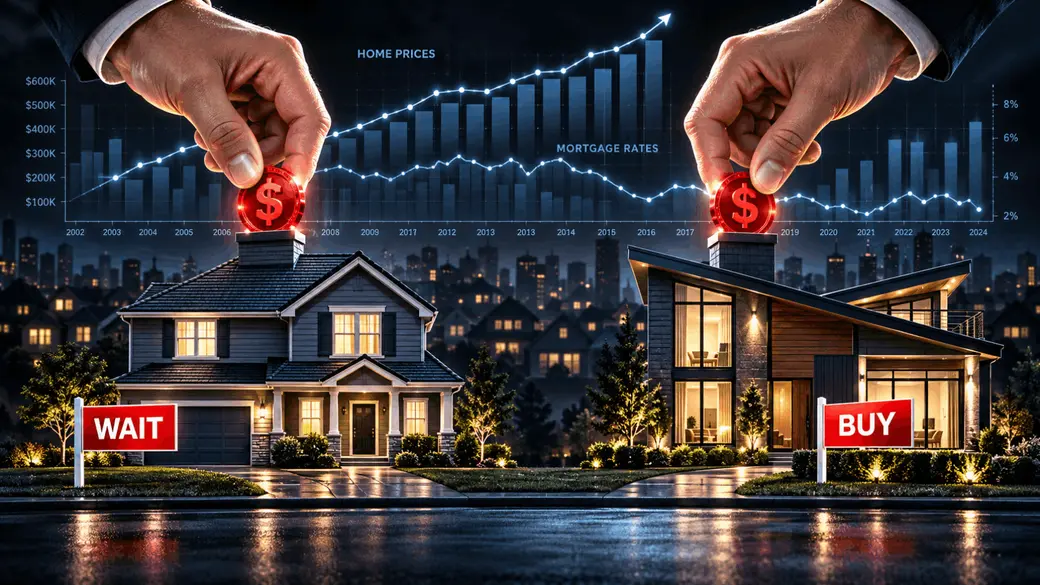
AD Mortgage compared two paths for every state and year from 2000 to 2022: buy a home now, or wait two years and buy later. For each scenario, they compared the same core numbers: the home price, a 15% down payment, the monthly mortgage payment at that year's average rate, and for the waiting scenario, two years of savings set aside at 10% of household income each year.
Whichever path cost less overall counted as the winner for that state and year. Across every state and year combination, buying now came out ahead 61% of the time.
The win rate wasn't the same everywhere. California and Florida had the highest win rate in the study at 74%. West Virginia had the lowest at just 39%.
That California number matters directly to Inland Empire buyers. Based on AD Mortgage's state-level data, buying now beat waiting here 74% of the time from 2000 to 2022. And in 2022 specifically, buying now beat waiting in every single state.
Why Waiting for Lower Rates Doesn't Always Pay Off
Ask any buyer why they want to wait, and rates usually come up first. And it makes sense on the surface: if rates drop, a home costs less to finance, so waiting should pay off if there's good reason to believe rates will be dropping soon.
The study found two stretches where that assumption fell apart.
From 2000 to 2002, the average rate fell from 8.05% to 6.54%, and buying now won only 34% of scenarios. From 2013 to 2015, the average rate moved from 3.98% to 3.85%, and buying now in 2013, the higher rate year, won 84% of scenarios.
A lower rate two years from now doesn't erase what happens to home prices and your savings in the meantime. Both examples show the same pattern: the math depends on more than the rate alone.
The Winning Strategy Changed Almost Every Year
If you're hoping for a clear signal on when to buy, the data won't give you one. The strategy that won flipped again and again over the 23 years in this study.
From 2003 to 2005, buying now won 94% to 100% of scenarios. From 2007 to 2010, waiting won every single year, tied to the housing crash. From 2015 to 2017, buying now won 92% to 100% of scenarios again. In 2018, buying now won only 2% of scenarios, tied to rates falling fast into 2020 before home prices caught up. From 2020 to 2022, buying now won 100% of scenarios, all three years.
No economist called these swings ahead of time. Waiting for the market to send a signal means betting on something nobody, not even professional forecasters, can predict with confidence.
What This Means for Buyers in Riverside and San Bernardino Counties
This history lesson lines up with what I'm seeing locally right now. Inventory in both counties has been shrinking, not growing. Riverside County's single-family inventory is down close to 20% from a year ago, and San Bernardino County's is down over 14%. Months of supply has tightened in both counties as well.
That combination, fewer homes for sale and prices holding steady to rising, is exactly the kind of environment where waiting has historically cost buyers more than it saved them. It doesn't guarantee the same outcome going forward, but it's worth weighing against whatever rate prediction has you sitting on the sidelines.
The Real Question Is Whether You're Ready
This study leaves out a few things on purpose: home equity, price appreciation, property taxes, insurance, and maintenance costs. It's a straight comparison of purchase and financing costs, not a full picture of owning a home.
Prices and rates will keep moving whether you buy now or later, and nobody can tell you exactly where they'll land in two years.
What you can control is your own readiness. Readiness comes down to your savings, your budget, and how comfortable you feel with the numbers in front of you. Financial readiness predicted good outcomes more than market timing did, across the full 23 years.
So instead of watching rates or prices, ask yourself one question: does a home fit your budget today? If you want to run your actual numbers instead of guessing, reach out and I'll walk through them with you.
Frequently Asked Questions
Is it better to buy a home now or wait for lower mortgage rates? A 23-year study by AD Mortgage found that buying now beat waiting two years in 61% of cases nationally and 74% of the time in California. Waiting for rates to drop doesn't account for what happens to home prices and your savings in the meantime, which is often enough to erase the benefit of a lower rate.
What percentage of the time did buying now beat waiting in California? Buying now beat waiting 74% of the time in California from 2000 to 2022, tied with Florida for the highest win rate of any state in the AD Mortgage study.
Does waiting to buy a house ever pay off? Yes, in certain years. From 2007 to 2010, during the housing crash, waiting won every year. In 2018, buying now won only 2% of scenarios. But these periods were unpredictable in advance, which is why the study found financial readiness mattered more than trying to time the market.
How do I know if I'm ready to buy a home in Riverside or San Bernardino County? Readiness comes down to your savings, your monthly budget, and whether you're comfortable with the numbers at today's price and rate, not whether you can predict where rates or prices will go. A local lender and agent can run your specific numbers to answer that.
Should I wait to buy because inventory might increase later? Inventory in both Riverside and San Bernardino Counties has been shrinking over the past year, not growing, with months of supply tightening in both. Historically, buying in a tightening market has outperformed waiting more often than not.
Categories
Recent Posts